



Description
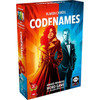
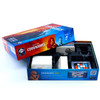
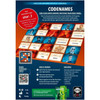
This new edition of Codenames features refreshed artwork, but the beauty isn't just skin deep. It's also got an improved word list, a box insert to keep everything organized, and a revised rulebook that makes the game even easier to learn.
Shortwave radio stations known as "numbers stations" have been used for over 100 years to transmit coded information to operatives in the field. Today, the spymaster has to help their operatives make contact with the rest of the agents on their team, who are only known by their codenames. Spymasters take turns "broadcasting" a single word to help their team identify one or more agents. But regular people have nicknames too, so you'll want to be careful not to invite an innocent bystander onto the team. Or worse, one of the other team's agents. And if you reach out to the assassin, well, it's Game Over!
Setup is easy. Players divide into two roughly equal teams (it's ok if one team has an extra person), and each team chooses a spymaster. Spymasters sit together on one side of the table, and their operatives sit across from them on the other side.
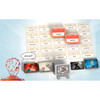
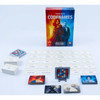
One person shuffles the word cards and deals out 25 of them, arranging them into a 5x5 grid. A spymaster shuffles the key cards and draws the top one, putting it into the stand so that only the spymasters can see it. This lets the spymasters know which job each person in the grid has. Each spymaster takes the agent tiles in their color, and the color indicated along the edge of the key card gets the Double Agent card added to their stack, with their color facing up. This team has one extra agent to guess, but they also get to go first. Set the Innocent Bystander and Assassin cards between the spymasters, and you are ready to get to work!
The first spymaster looks over their agents' names and thinks of a single word that relates to one or more of them. But be careful not to choose a word that also works with enemy agents, innocent bystanders, or even the assassin! Say the word and a number to indicate how many agents the word applies to.
Now your operatives get to discuss which agent(s) they think are theirs. (A solo operative is free to think out loud.) They must make at least one guess by touching their pick, but they can guess up to the number the spymaster said, plus one more. This extra pick is handy if you spot a codename that matches a previous clue, or just to make a guess to try to catch up or get ahead.
If a guess is correct, the spymaster places an agent card in their color over the codename. But if the guess is an innocent bystander, then one of those cards is placed on the name and that team's turn ends.
Spymaster: Remember - this is a one-way radio transmission, so you don't get to use any facial expressions, gestures, or react to your operatives' discussion about which agents they think you're referring to! If they guess an agent on your team, but it wasn't one you meant with your clue, simply place your agent color card without any reaction.
If an enemy agent is chosen, then the other spymaster gets to place their color on the codename and begin their turn. If it's the assassin, then the game is over and the team that guessed the assassin loses.
As long as the assassin isn't revealed, then a team wins when they have guessed all of their agents. Simply flip the word cards over and you're set up for a new game!
Of course, there are rules about which words you can and cannot use as clues, so be sure to check out the full rules. If you use an invalid clue, then you lose your turn.
A clever team will use strategy to come out on top. A spymaster could choose a word that's very specific to just one agent, but that lets the other spymaster choose a more general word for multiple agents and pull ahead. And operatives can just make guesses they're confident with, but using all their allotted guesses can give them the advantage- if they're right!
Fee like you've mastered the game? Check the rulebook for some advanced rules that'll make the game feel new again!
Game includes:
- 200 cards with 400 codenames
- 16 agent tiles in two colors
- 1 double agent tile
- 7 innocent bystander tiles
- 1 assassin tile
- 40 key cards
- 1 card stand (made of RE-Wood)
- 1 rulebook
Fun for ages 10 to adult. For 4 or more players. A game usually lasts around 15 minutes.
Related Products
Related Products


The Game
Asmodee


Tantrix Game
Hachette Boardgames
Tsuro Game
Calliope Games